Research
Research into inflammatory arthritis (IA) has advanced significantly in the UK and globally. The introduction of biologic DMARDs in the late 1990s marked a major breakthrough, targeting specific parts of the immune system. More recently, JAK inhibitors have further expanded treatment options.
Alongside medical advances, care and management strategies have also evolved, emphasising movement over rest during flares to help maintain joint mobility and strength.
Despite this progress, many questions remain, such as why treatments work well for some but not others. Continued research is essential, and the voices of those with lived experience must be central to shaping the future of IA care.
This is where Public and Patient Involvement and Engagement (PPIE) plays a key role. PPIE means working with patients, carers, families, and the public as active partners in research, helping to shape priorities, improve relevance, and ensure that findings truly reflect real-life experiences. For more information about being a research partner please see this insightful guide by Mel Brooke here
One of our charity’s core aims is to promote best practice in PPIE and help ensure that research findings are accessible and relevant. Scroll down to find out how you can get involved, it’s not just clinical trials that can change lives.
Here are some ways you can get involved




Research Questions and Opportunities
What is PPIE?
PPIE is the active involvement of patients, but also carers/families and members of the public, in shaping and being a part research. Examples could be:
- Helping decide which research questions should be asked
- Designing study materials (.e.g consent forms, surveys), making sure they are relevant and accessible.
- Being a member of research committees.
- Co-authoring publications.
- Public talks
- Social media campaigns
- Newsletters or website articles explaining research outcomes
What does PPIE mean in practice?
It is vital that people with lived experience either as a patient or carer/family member are involved in research as it makes the research more relevant, improves recruitment and retention in studies, ensures that outcomes and the impact reflect real patient priorities and can build public trust in science and healthcare. You may be asked to take part in research studies when attending your appointments with your healthcare team i.e.
- Consenting for your blood and/or synovial fluid to be used for medical studies
- Be a part of new a clinical trial
- Agree to be part of the national registered: RA, JIA and psoriatic arthritis registers.
There are many other ways you can be involved in research:
- Complete surveys
- Join patient engagement meetings with researchers to discuss research priorities, help meet the unmet needs
- Help review patient materials to make sure they are accessible and relevant
- Join an advisory board, provide feedback throughout a research project
- Use/test digital platforms
How do I find out about research opportunities?
Speak to your rheumatology team as they will be able to let you know what research studies are recruiting and whether you are eligible.
You can also see our above on this page for latest research opportunities
What happens to my data?
Every research project follows its own protocol, but all must comply with GDPR and data protection regulations. If you have any questions, we encourage you to speak directly with the research team about how your personal information will be handled and kept safe.
I am a researcher can I work with IAUK
We aim to support research that helps improve the lives of anyone of any age living with IA. If your project aligns with our vision and mission, please do get in touch, email info@inflammatoryarthritis.org
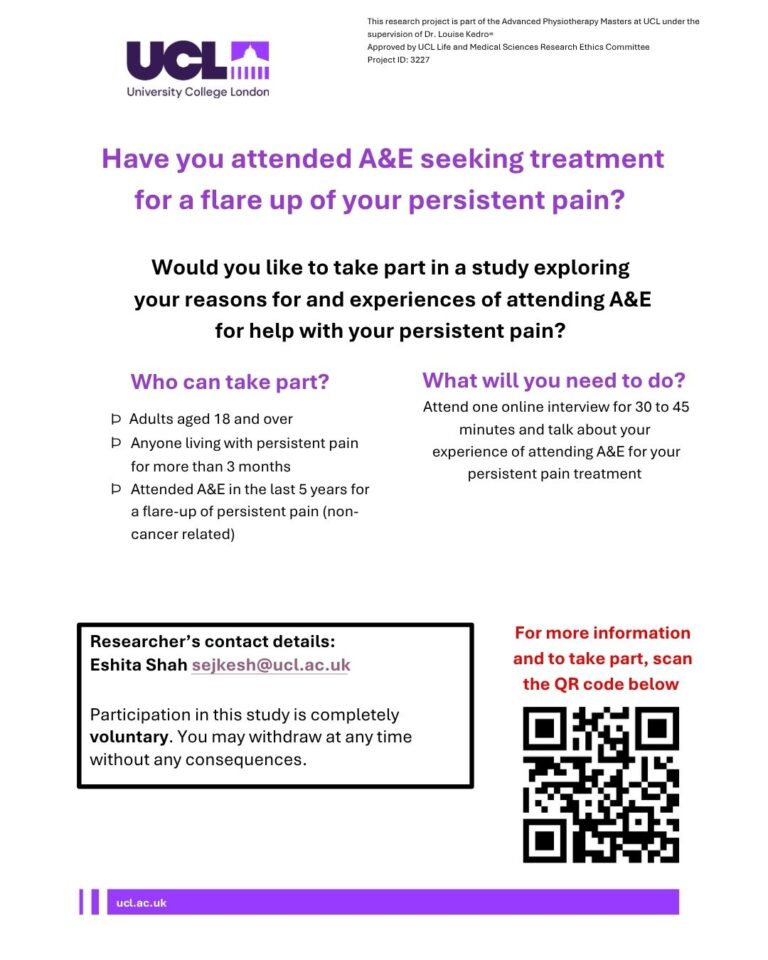
Have you attended A&E seeking treatment for a flare of persistent pain?
Eshita Shah, a Master’s student from University College London is doing a study exploring the reasons for and experiences of people who attend A&E for flare ups of persistent pain. If you are interested or would like more information please email the research Eshita Shah sejkesh@ucl.ac.uk
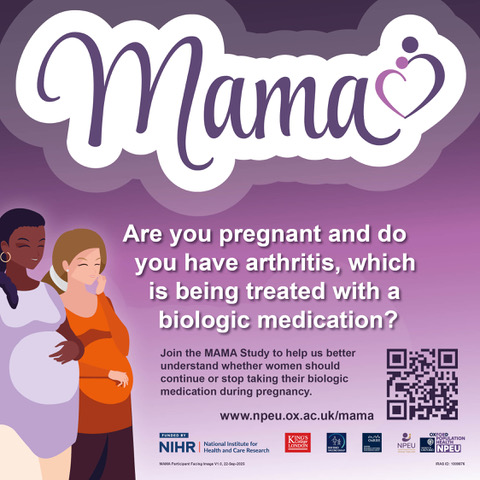
MAMA Study
The MAMA Study is designed to find out whether it is better for women who have inflammatory arthritis and are pregnant to temporarily stop or to continue taking biologic medications. Currently, both continuing and stopping using biologics beyond 28 weeks of pregnancy are routine practice in the UK; this varies between different hospitals around the UK. The MAMA Study is looking to provide an answer on which is the better approach for women and their babies. For more information click here
Research findings
Here are a selection of published research papers from a variety of trusted sources:
UK Juvenile Idiopathic Arthritis Biologics register here
UK Rheumatoid Arthritis Biologics Register here
UK Psoriatic Arthritis Register here
UK Ankylosing Spondylitis Register here
Cluster Consortium Research Findings here
National Early Inflammatory Arthritis Audit here
Charity Collaboration the current mental health status of children and young people with JIA, and their wider family here
How to Support

contact us
Researchers
We would love to speak with you! Feel free to reach out with any questions.